Can you provide separate medication packs for work or a day program?
Yes, when the medications are suitable for the format. We agree which doses go to each site and who receives them, and then confirm whether a separate pickup or delivery is needed.

Organize medication supplies, delivery and staff support with University Pharmacy. We work with group homes, developmental services agencies, licensed long-term care homes and people receiving care at home.
We are an independent group of pharmacies with 14 stores throughout Ontario. We have stores in Windsor/
Each individual pharmacy is free to operate based on the needs of their clients. We are very flexible in our approach adapting to the needs of the clients .
We have experience supporting group homes and community living agencies in Windsor, London and Brampton. We’ll confirm which pharmacy can support your sites and what services it can provide.
Talk to a member of our team to place a medication order or ask a question. Community Living teams can use the dedicated refill number their pharmacy provides.
A pharmacist is on call 24/7 for participating homes. We share the after-hours contact and escalation steps during onboarding.
Clients and authorized caregivers can send a new prescription, request a transfer or refill, and ask a pharmacist for a medication consultation online.
We review each client’s medications and look for ways to improve their medication plan. When appropriate, we can coordinate administration times to make medication passes simpler.
We arrange follow-up reviews and plan on-site audits with your agency, including how staff report concerns and who follows up.
Ask about flu and COVID-19 clinics at the pharmacy or at your facility. We also offer travel vaccinations. We confirm timing, vaccine supply and eligibility when arranging the appointment or clinic.
We help support workers identify clients who may qualify for financial assistance and complete application forms. Where an Ontario Drug Benefit co-payment applies, we waive up to $2.00.
Our discounts extend to clients and staff. For those without a drug plan, we offer medication at cost.
Our pharmacists provide medication counselling, follow up on concerns, and recommend changes when needed. We work with prescribers and other health professionals to clarify prescriptions, arrange renewals and look for options covered by the client’s drug plan.
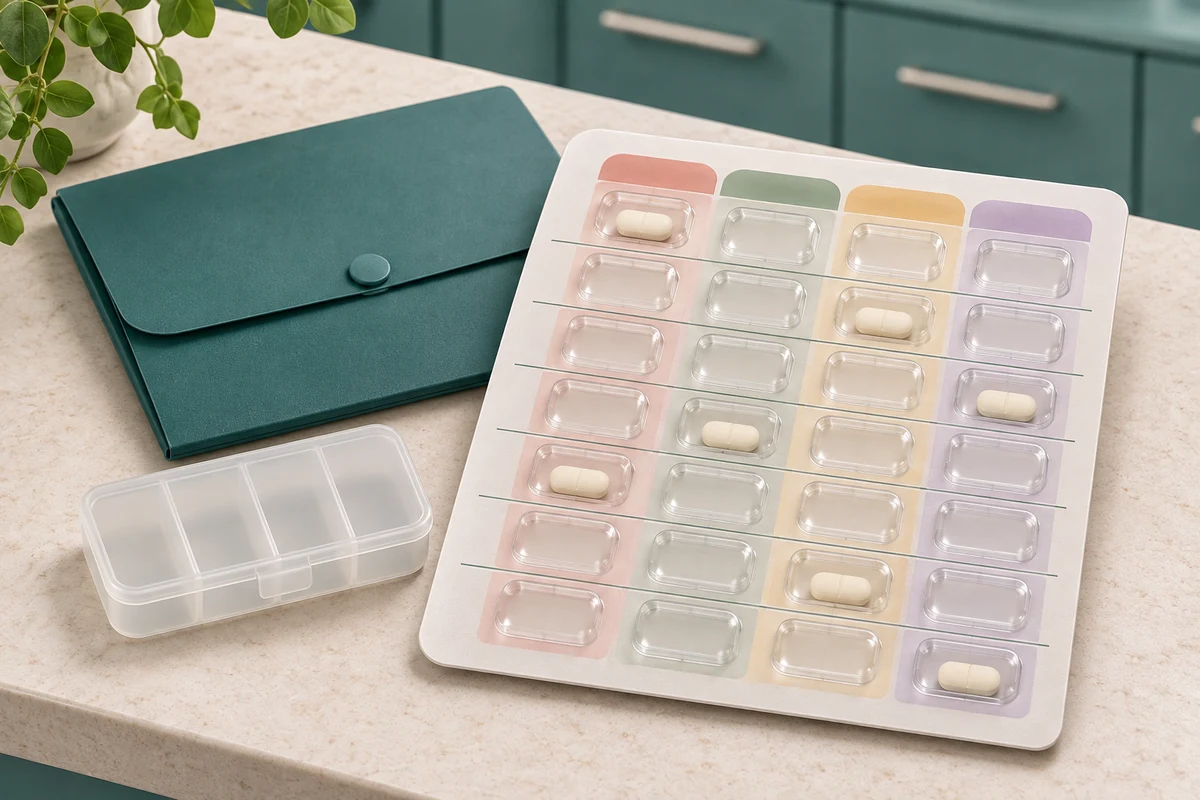
We offer sealed pouches and Dispill blister cards organized by date and dose time. Automated filling helps sort eligible medications, and our team checks the contents and labelling before release.
We can prepare separately labelled supplies for home, work and day programs. Explore packaging options
Delivery is free for participating homes. Same-day delivery is available in eligible London areas. Ask about contactless handoff options where receipt and signature requirements can be met.
We coordinate delivery schedules with your team and can deliver day-program supplies directly to the program. View delivery options
We can coordinate refill dates to reduce separate orders and trips. Choose vials or compliance packaging. Automatic refills can be arranged where appropriate, and a pharmacist can assess whether a prescription extension is suitable.
We offer non-sterile compounding, including topical mixtures and oral suspensions, when a pharmacist determines a custom preparation is needed.
For clients with feeding tubes, our pharmacists work with the care team to review suitable medication forms and provide client-specific guidance to staff.
We arrange pickup or drop-off for unused and expired medications. We provide return bags so participating homes can keep items for disposal separate from medications or written prescriptions sent in for a change.
Return sharps separately in an approved sharps container through the process agreed with your pharmacy.
Ask our pharmacists about non-prescription options and drug information sheets. We can source herbal supplements, vitamins, personal-care supplies and specialty products such as nutritional feeds and continence supplies.
When suitable, the pharmacy can include approved non-prescription medications in a client’s compliance pack. Shop OTC
We coordinate medications for people in licensed long-term care homes, supported living and private homes. Your pharmacy can confirm coverage and schedules for your care setting.
Ontario requires licensed homes to contract with an accredited pharmacy provider. The written agreement must cover 24/7 medication supply, directly or through another accredited pharmacy. A monitored dosage system is part of the home’s medication management requirements. Ontario Regulation 246/22, sections 128–135
A participating pharmacy can help you or your authorized caregiver transfer prescriptions, coordinate refills and choose a packaging format that fits your routine. Ask about delivery in your area and what to do when prescriptions change.
For publicly arranged nursing, personal support or other in-home care, see Ontario’s home and community care services.
Bring the number and types of sites, municipalities served, delivery and after-hours needs, current packaging formats, and the medication record system you use. Share identifiable resident information only through the secure channel agreed with your pharmacy.
Also called compliance packaging or monitored dosing, blister cards organize suitable medications into sealed compartments marked for scheduled doses. We can prepare separately labelled packs for home, work or a day program. Your pharmacy confirms the schedule, who receives each supply and whether it needs a separate delivery.
A pharmacist reviews the medication list, dose times, storage needs and the person’s ability to use the pack. Before starting multi-medication packaging, the pharmacy discusses the plan and obtains written consent from the person or their authorized decision-maker. Some medications may need to stay in their original containers or be supplied separately. Ontario College of Pharmacists packaging guideline
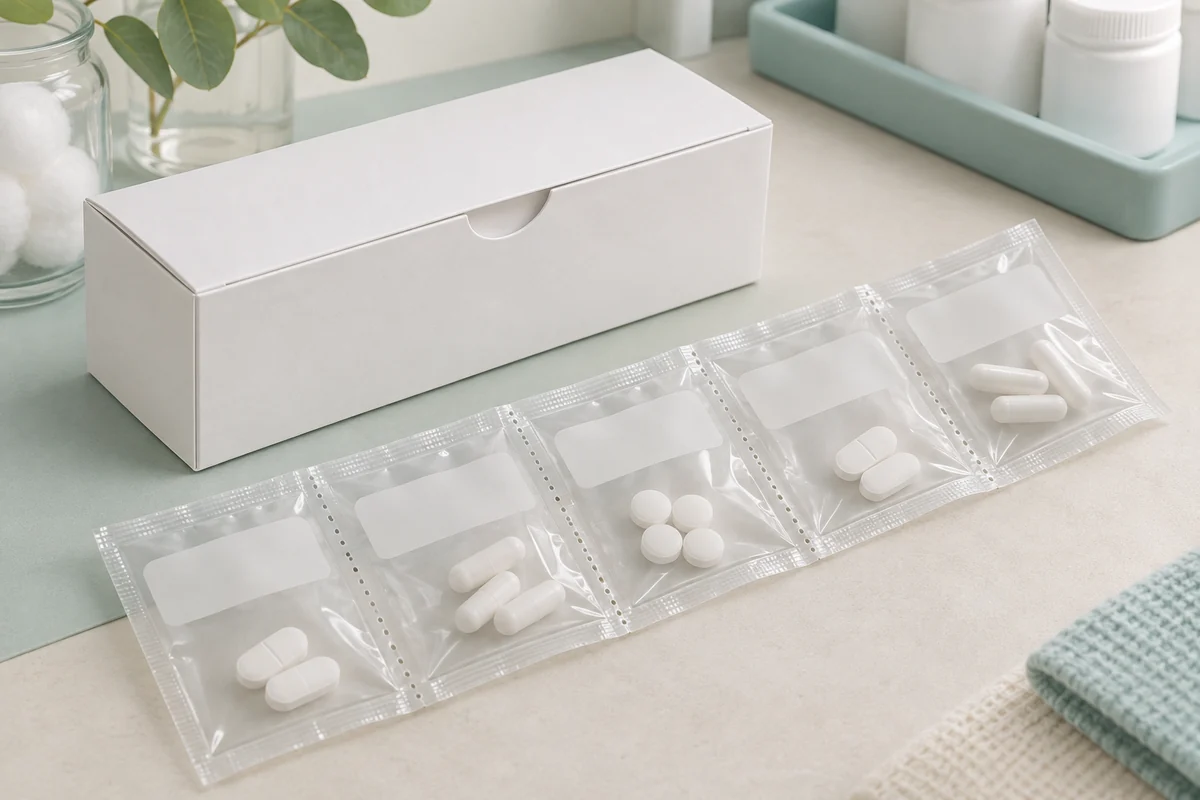
SynMed is the system that fills blister cards with suitable tablets and capsules. Dispill is the blister card format shown here. The pharmacy checks and labels each pack before it goes to the care team. SynMed packaging systems
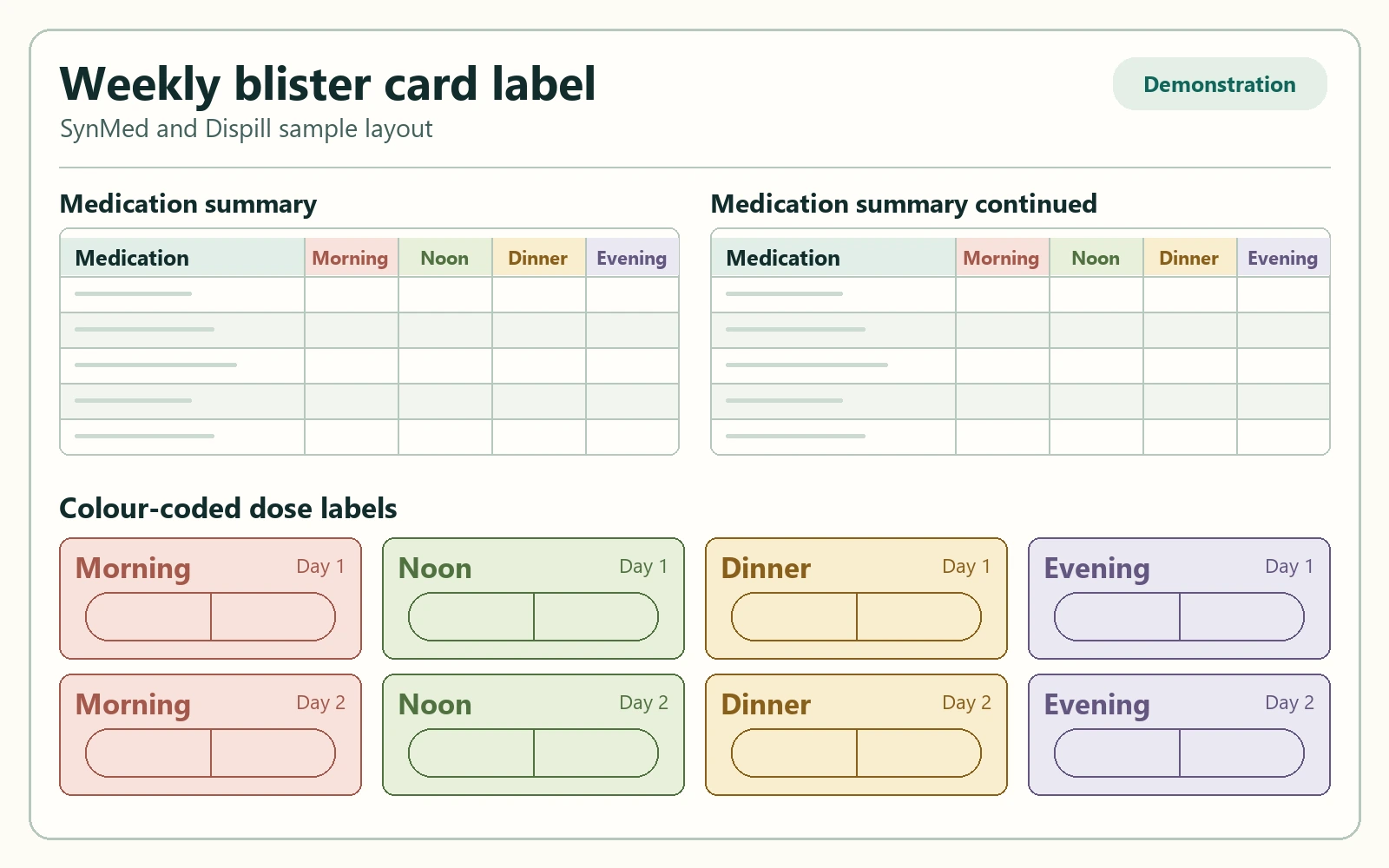

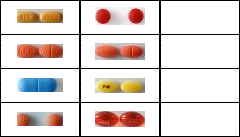
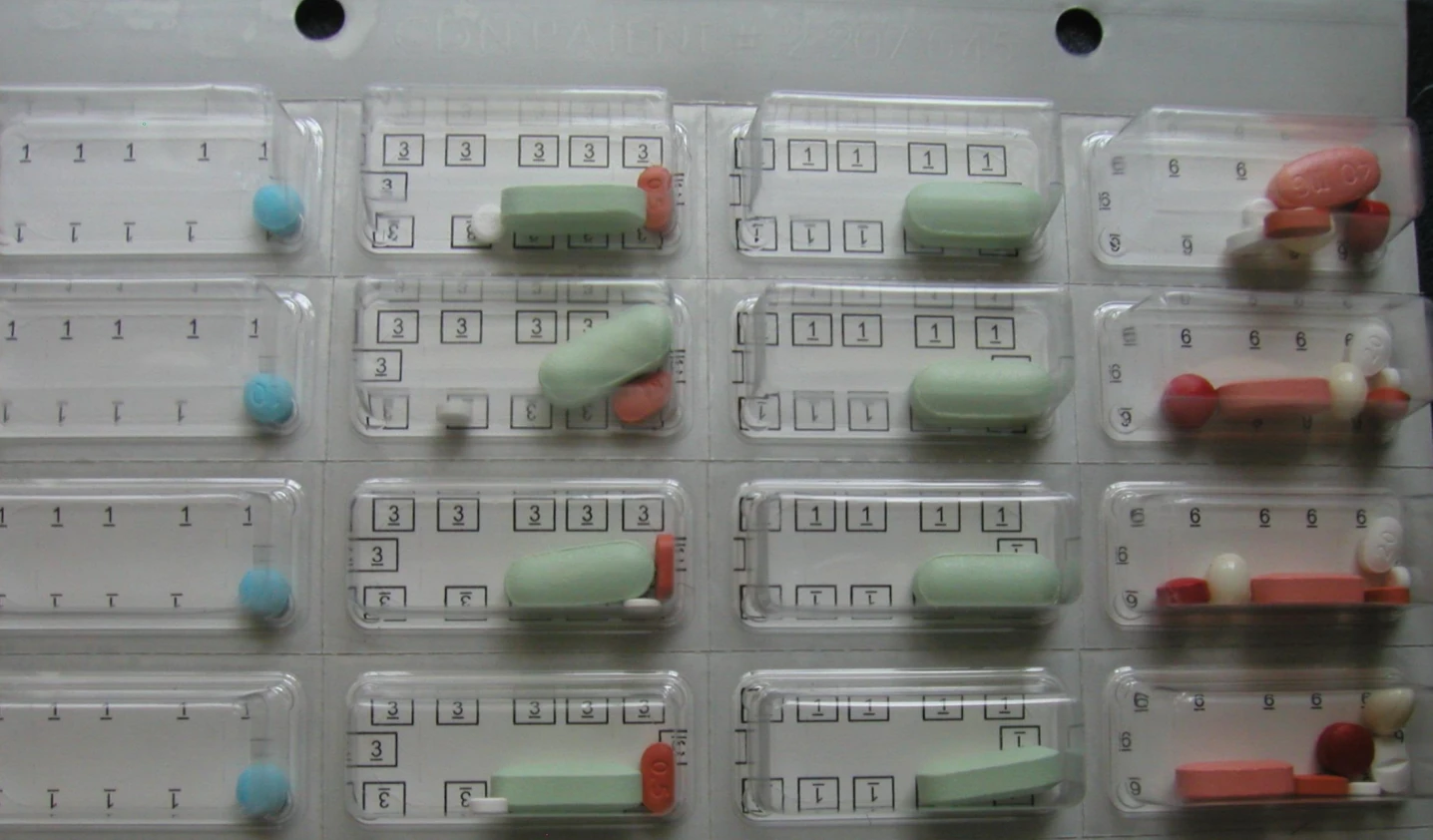
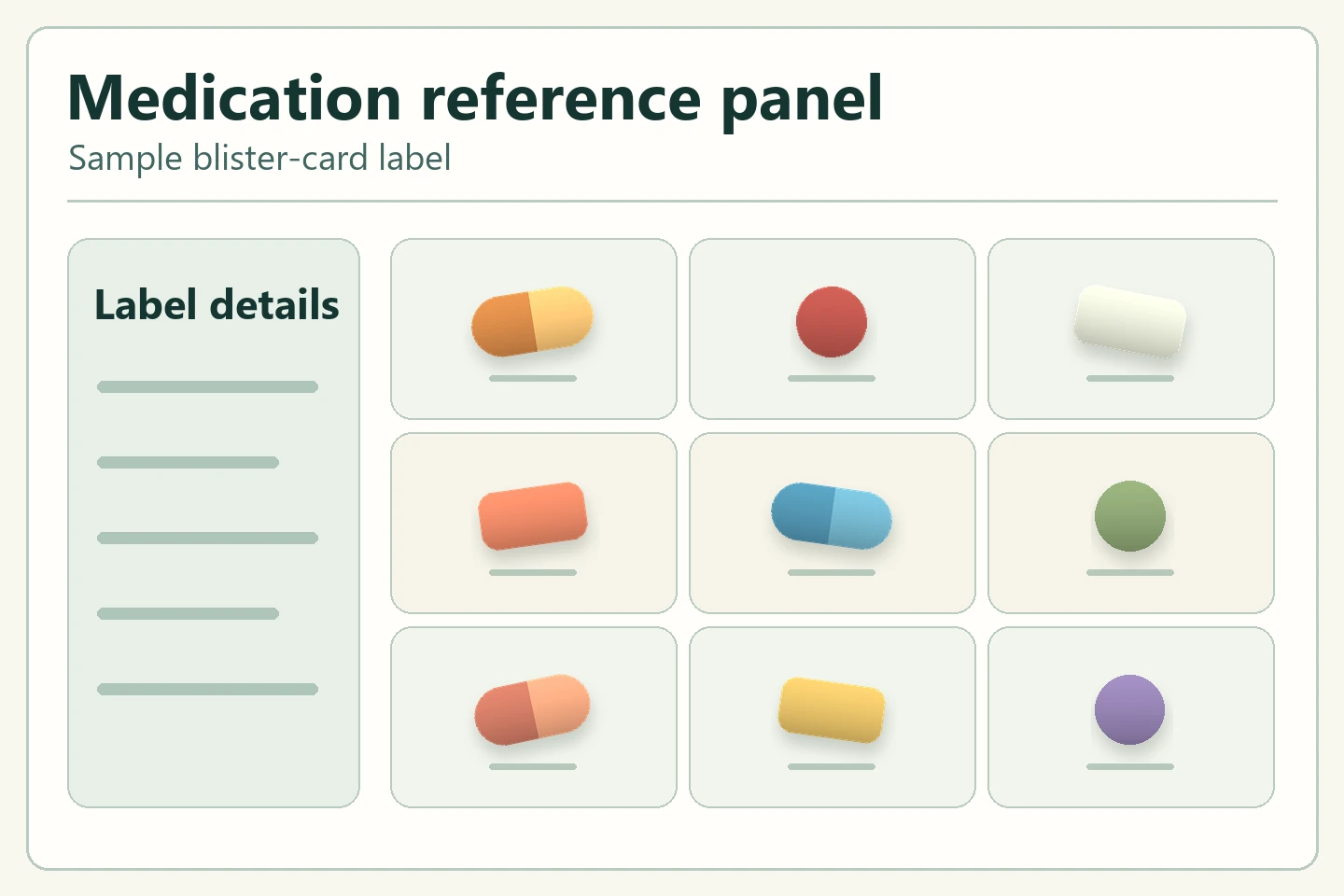
Examples from the SynMed Dispill label samples. Identifying and prescription details have been removed.
A common Dispill card has seven days and four dose times, for 28 compartments. Use the printed day and time on the pharmacy-issued label to identify the assigned compartment. The pharmacist determines which medications scheduled together can share a compartment.
Tell the pharmacy promptly when the prescriber changes, stops or adds a medication. The pharmacy can check the affected pack and coordinate updated directions or a replacement. Tell us about upcoming admissions, discharges or day-program changes so we can plan the next handoff.
We use automated equipment to fill blister cards with eligible tablets and capsules. The care team and pharmacy agree on the schedule, and the pharmacy team checks and labels the finished packs before release.
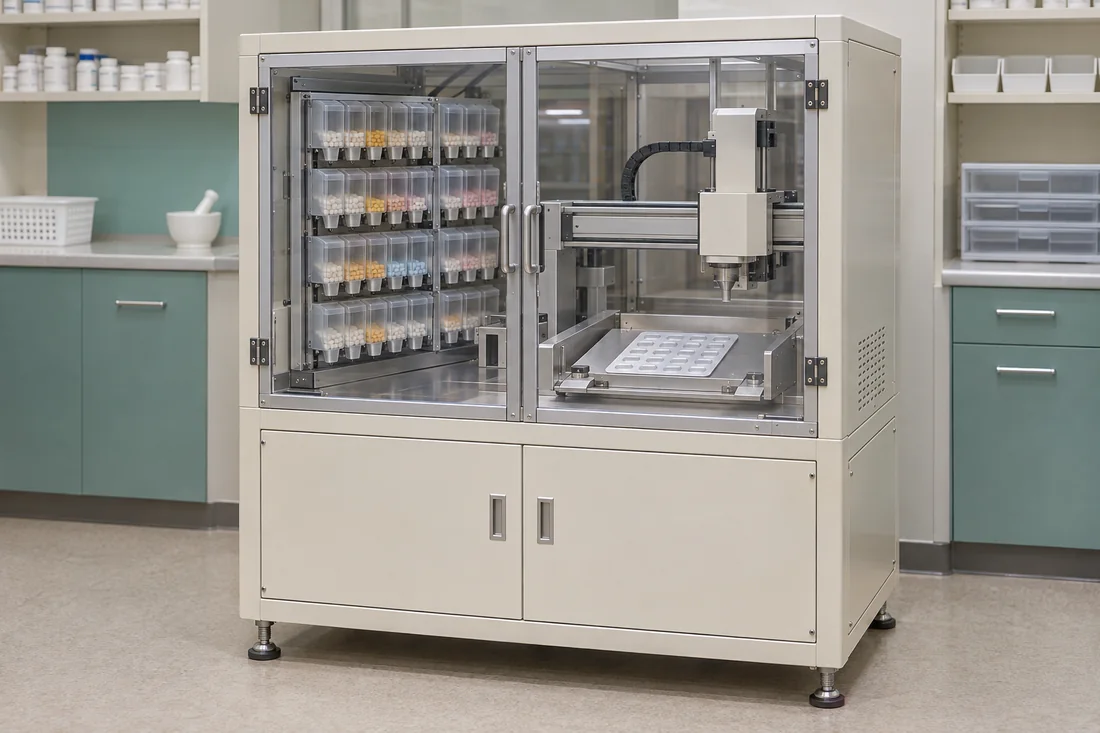
BD’s Parata XF is an example of an automated system for single- and multi-dose blister cards. Parata also makes the ULTRA. Model and configuration determine available features.
Ask for a demonstration of the equipment and labelled packs your pharmacy uses.
We offer the MED e-care electronic medication administration record (eMAR). Authorized staff can use it to review scheduled medications, record administration and check entries at shift handoff.
In a demonstration, we can walk through your agency’s workflow for new orders, changes and reporting. We’ll confirm the pharmacy integration, access roles, staff training and any paper backup your sites need.
Paper medication administration records (MARs) are available in unit-dose and standard formats. Notices for as-needed medications (PRN) appear on the back. MARs can include client photos to help staff identify the right record.
Male and female body diagrams on treatment records let staff mark the area where care is needed or provided.
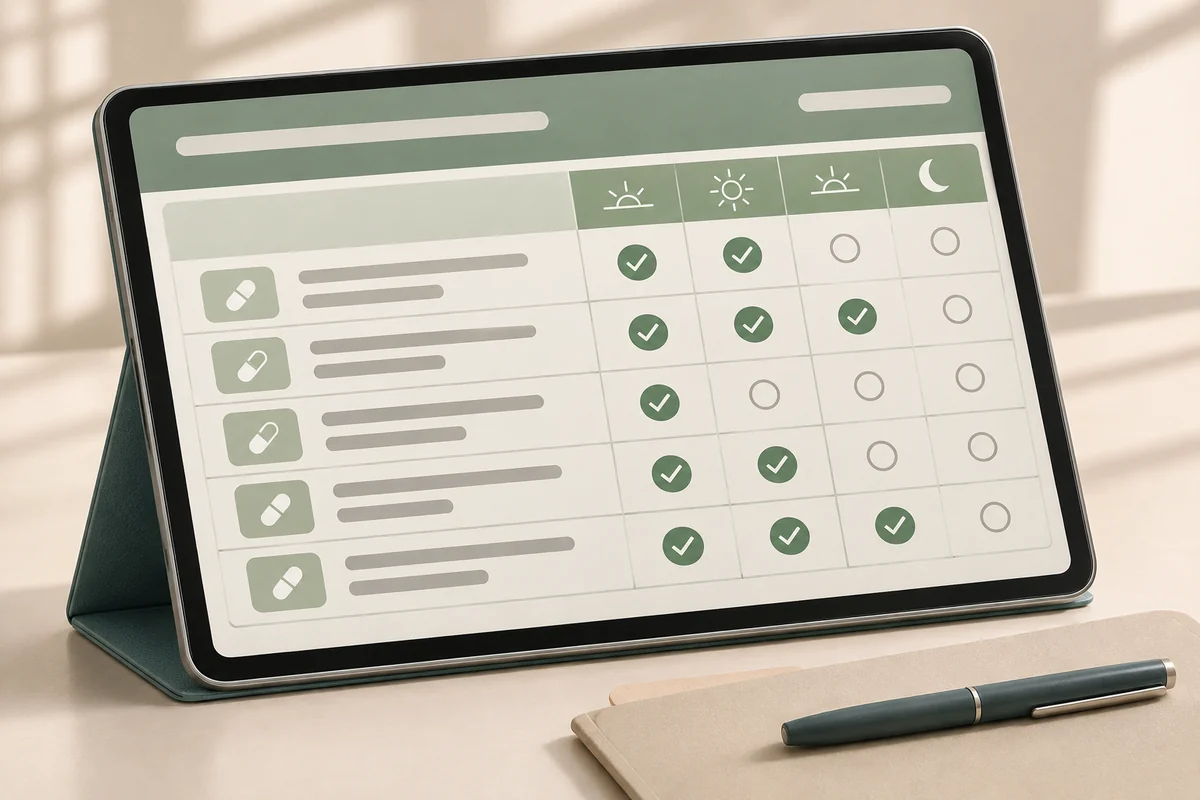
Simplified electronic MARs are available on tablets so authorized staff can review and record medication administration during a shift.
We can list non-prescription medications reviewed by the care team alongside prescriptions on the MAR. Records can also include reminders for fingernail care, showering and monitoring parameters set in the care plan.
We help developmental services agencies and group-home teams arrange training for the tasks their staff perform. The program materials cover nursing consultation and individualized training, including support for medication- or person-specific needs.
Community Support Training Solutions, a division of Ottawa Rotary Home, offers self-paced online theory, practice labs and refresher courses for participating agencies. Ask about current course availability, enrolment, delivery formats and practical assessments. See the CSTS training catalogue
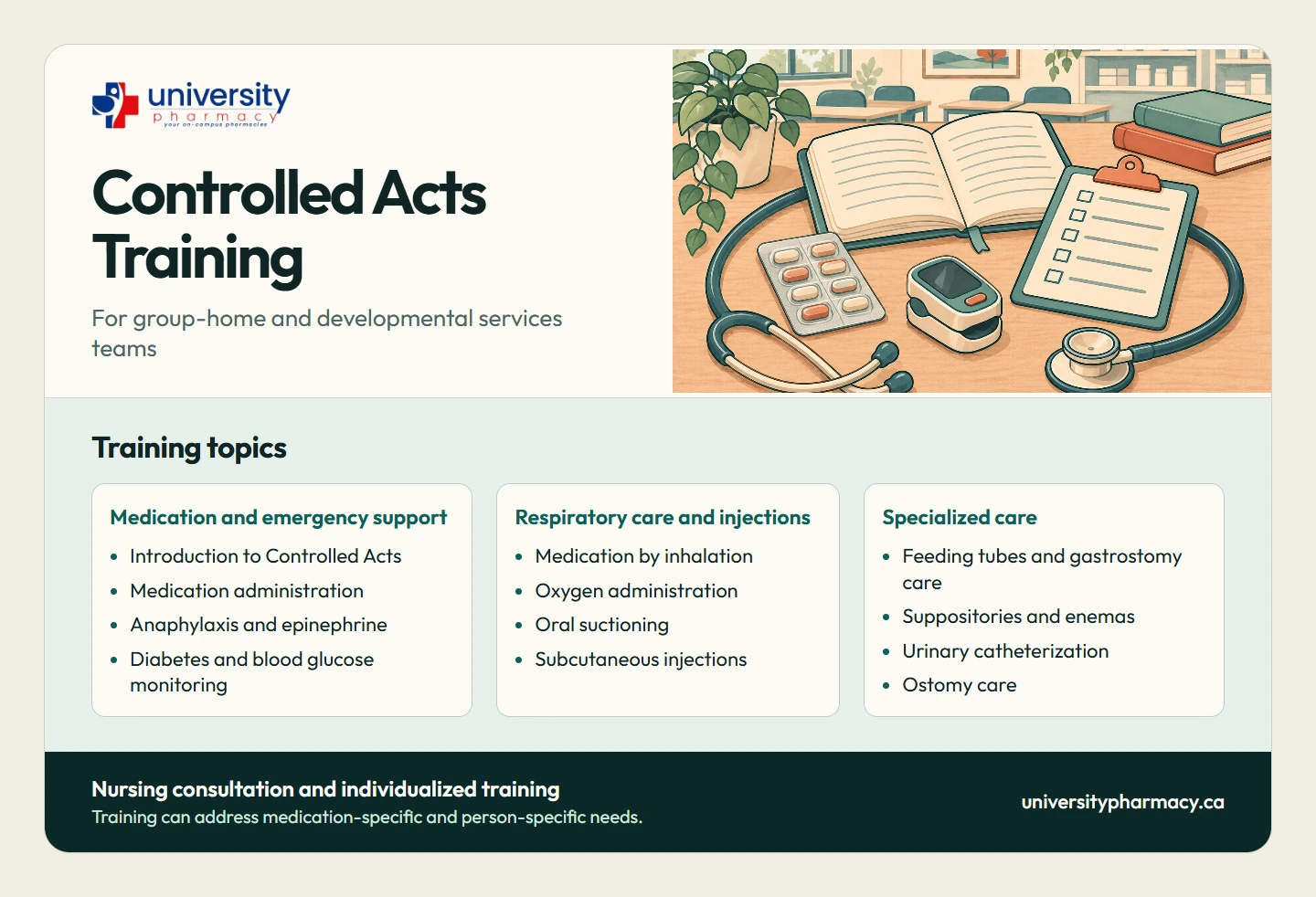
Ontario requires covered developmental services agencies to provide or arrange staff training based on the specific needs of the people they support, including controlled acts when required. Training records document learning. Your agency and clinical lead must check competency and the authority that applies to the task and person. Ontario Quality Assurance Measures, section 7 · College of Nurses of Ontario guidance
We are very responsive to the requests from homes, tailoring our approach to each individual home that we serve, and their particular needs and requirements.
Start with a conversation about how your sites handle medication today. We can review sample packs and walk through what a change would involve before you choose a date.
Yes, when the medications are suitable for the format. We agree which doses go to each site and who receives them, and then confirm whether a separate pickup or delivery is needed.
Ask for sample packaging and a MED e-care demonstration based on your shift handoff, medication changes and reporting needs. Confirm site-specific setup and access with the pharmacy.
Contact the pharmacy promptly through the agreed channel. The team can review the existing pack, confirm the new order and coordinate any revised instructions or replacement.
Course choices depend on the people your staff support and the tasks they perform. Ask the provider about theory, practice and completion records. Confirm task-specific competency and authority with your clinical lead.
First confirm the secure submission channel with your pharmacy. Keep contact enquiries limited to business details and share the minimum resident information needed through that channel.
Ontario’s Personal Health Information Protection Act (PHIPA) governs how pharmacies handle personal health information. At onboarding, confirm how authorized staff will share records and which fields are needed for each request.
Use the approved secure channel for resident documents, medication lists and completed forms. Keep resident names, identifiers and clinical details out of ordinary email and general enquiries.
Before transferring records, agree who can send and receive each type of information. Share only what is needed for the request and confirm your pharmacy’s privacy contact. Contact the pharmacy that handled the record to ask about access, correction or a privacy concern.
Service is our number one priority.
Tell us the municipalities you cover, the number of homes and the medication workflows you’d like to review. We can discuss sample blister packs, the packaging equipment, an eMAR demonstration, staff training and a transition plan.
Lower Level, University Community Centre, Room 36C, 1151 Richmond St, London, ON N6A 3K7
(519) 661-40581153 Western Rd, London, ON N6G 1G6
(519) 661-3193McMaster University Student Centre, Room 109B, 1280 Main St W, Hamilton, ON L8S 4K1
(905) 540-3787CAW Student Centre, Room B06, 401 Sunset Ave, Windsor, ON N9B 3P4
(519) 971-3644Unit 204, 6045 Bank St, Greely, ON K4P 1N3
(613) 455-333312015 Main St W, Winchester, ON K0C 2K0
(613) 774-2094